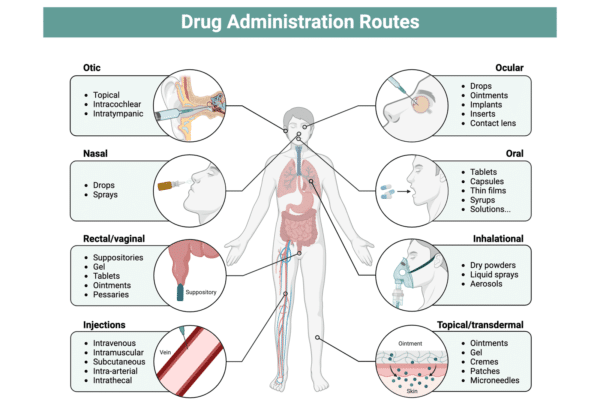
Routes of Drug Administration

Administration of drugs to human subjects ranges from oral, sublingual, rectal, intravenous, intramuscular, subcutaneous, intradermal, and intrathecal. The method of administration selected is dependent upon a multitude of variables, such as the distinctive characteristics of the drug, the current condition of the patient, and the projected therapeutic outcome. It is important for healthcare providers to…
Read More

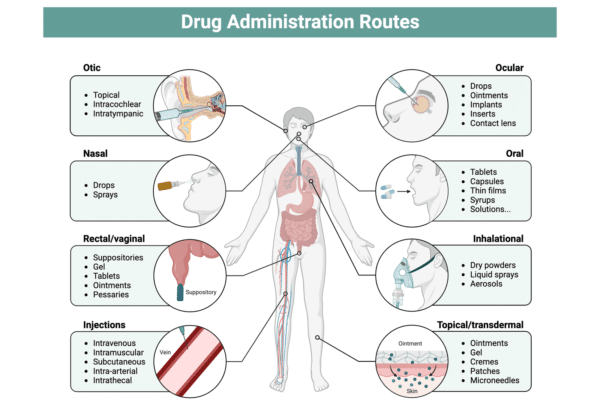
Routes of Drug Administration

Introduction The administration of drugs is an essential aspect of medical practice. It involves the process of delivering medication to a patient’s body through various routes. The appropriate route of administration for a given situation depends on several factors, including the drug’s physical and chemical properties and patient-related factors. This chapter discusses the different routes…

Read More

Dosage Forms of the Drugs

Introduction In the vast world of pharmaceuticals, understanding the various dosage forms of drugs is crucial. This article will delve into the different forms, their significance, and how they impact the effectiveness of medications. We’ll also use a flowchart to simplify the complex process of drug formulation. So, let’s embark on this journey of discovery…

Read More

An Overview of Essential Medicines

Introduction In the vast world of healthcare, there’s a term that stands out for its significance – “Essential Medicines.” These are the drugs that satisfy the healthcare needs of the majority of the population. They are selected with due regard to disease prevalence, evidence on efficacy and safety, and comparative cost-effectiveness. But what exactly are…

Read More

Drug Nomenclature: Drug Naming system

Introduction Have you ever wondered how drugs get their names? It’s not a random process but a well-structured system known as drug nomenclature. This article will take you on a journey through the intricate world of drug naming, shedding light on the logic and science behind the names on your medicine bottles. Drug Nomenclature: Drug…

Read More

Various Sources of Drugs

Drugs are obtained from various sources: Plants: Plants contain biologically active substances and are the oldest source of drugs. Medicinal plants have been used for centuries in traditional systems of medicine across the world, including opium, belladonna, ephedra, cinchona, curare, foxglove, sarpagandha, and qinghaosu. Plant-derived active ingredients fall into several categories, including: a. Alkaloids: alkaline…

Read More

Nature of the Drugs

All drugs are composed of chemical compounds, ranging from simple to complex molecules. While the majority of drugs are organic compounds, some are purely inorganic, such as lithium carbonate, ferrous sulphate, and magnesium hydroxide. Organic drugs can be weakly acidic (like aspirin and penicillin) or weakly basic (like morphine and chloroquine), or they can be…

Read More

Pharmacology: An Introduction

Pharmacology is the science of drugs, derived from the Greek words ‘pharmacon’ which means drug and ‘logos’ which means discourse. In the broadest sense, pharmacology deals with the interaction of exogenously administered chemical molecules with living systems. Any single chemical substance that can produce a biological response is referred to as a drug. Pharmacology encompasses…

Read More

Pharmacology of Alcohols

Introduction Alcohols, a term that often stirs up a cocktail of emotions, is an integral part of our lives. They are not just limited to the beverages we consume but extend to various sectors like healthcare, manufacturing, and even our household chores. This article aims to shed light on the multifaceted world of alcohol, its…

Read More