Adverse Drug Reactions: On-target and Off-target aspect

Introduction Adverse drug reactions (ADRs) are critical to pharmacology and medical treatment. These unintended consequences, often termed side effects, adverse effects, or toxic effects, are influenced by various factors such as the drug’s mechanism of action, dosage, and the patient’s health status. This article aims to provide an in-depth understanding of these adverse effects’ mechanisms,…

Read More

Classification of Adrenergic Receptors: A Quick Overview

Introduction Adrenergic receptors play a pivotal role in regulating physiological processes and are the target of numerous pharmacological interventions. These receptors are broadly classified into α and β types, with further subtypes within each group. This article aims to provide a comprehensive understanding of the classification of adrenergic receptors, their functional roles, and their implications…

Read More

Antiarrhythmic drugs: Quinidine (Class 1A)

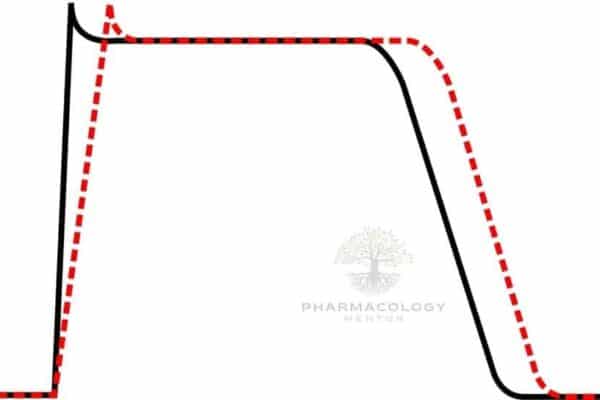
Introduction Quinidine is a class IA antiarrhythmic agent used to treat heart rhythm disturbances. It is a diastereomer of the antimalarial agent quinine, originally derived from the bark of the cinchona tree. The drug causes increased action potential duration as well as a prolonged QT interval. Cardiac Effects Similarities with Procainamide Unique Features Toxicity Extracardiac…

Read More

Antiarrhythmic drugs: Disopyramide (Class 1A)

Introduction Disopyramide is a Class 1a antiarrhythmic agent, primarily used in the treatment of ventricular tachycardia. It functions as a sodium channel blocker, inhibiting conduction by depressing the increase in sodium permeability of cardiac myocytes during the initial phase of the cardiac action potential. This reduces the inward sodium current, leading to an increased threshold…

Read More

Navigating the Complex Landscape of Drug Targets: From Validation to Druggability

Introduction The journey from drug discovery to market is a complex and intricate process, often fraught with challenges and uncertainties. One of the most critical aspects of this journey is identifying and validating the targets of drug action. This article delves into the intricacies of drug targets, exploring questions of druggability, target validation, and the…

Read More

Pharmacokinetic Principles: A Comprehensive Guide

Introduction Pharmacokinetics is the science that describes how drugs move within the body and is crucial for rational dosing in clinical settings. This article aims to provide a comprehensive understanding of the key pharmacokinetic principles, including the movement of drugs in the body, permeation, Fick’s Law of Diffusion, and the solubility characteristics of drugs. The…

Read More

The History of Pharmacology

The Intersection of Religion and Medicine At the dawn of human civilization, religion and medicine were inextricably linked. Priests, shamans, and holy people were the original pharmacologists, wielding the power of both spiritual and medicinal healing. They were the mediators between the earthly and the divine, and their influence within communities was largely based on…

Read More

The Evolution of Drug Discovery: From Small Molecules to Protein Therapeutics

Introduction The landscape of drug discovery has undergone significant changes over the years. Traditionally dominated by small organic molecules, the field has expanded to include large molecules like proteins, thanks to advancements in recombinant DNA technology. This article explores the journey from traditional small-molecule drugs to the increasingly important role of large molecules in modern…

Read More